
Last reviewed: October 2026
If you’ve noticed the scale creeping up even though you’re eating the way you always have, you’re not imagining it — and you’re not “broken.” Something real does change in the body as we move through our 50s. But the popular explanation, that metabolism falls off a cliff the day you turn 50, doesn’t match the research. The real story is quieter, slower, and much more within your control. Here’s what the best data actually shows, what’s really driving the changes you feel, and what helps.

What the Research Actually Shows About Metabolism and Age
The most important study on this question was published in Science in 2021 by Herman Pontzer and more than 80 colleagues. They pooled measurements from 6,421 people in 29 countries, aged 8 days to 95 years, using the “doubly labeled water” method — the gold standard for measuring how many calories people burn in daily life, not just in a lab.
Their findings overturned a few long-held assumptions:
- Adult metabolism is remarkably stable from about age 20 to 60. Once researchers accounted for body size and fat-free mass (muscle, organs, bone), daily energy expenditure barely changed across those four decades.
- The real decline starts around 60, and it is gradual: roughly 0.7% per year.
- By their 90s, people burned about 26% less than middle-aged adults.
So turning 50 is not a metabolic trigger. If your cells aren’t suddenly slowing down at 50, why does weight feel so much harder to manage? The answer is mostly about what you’re made of and how much you move — and both of those tend to shift long before 60.
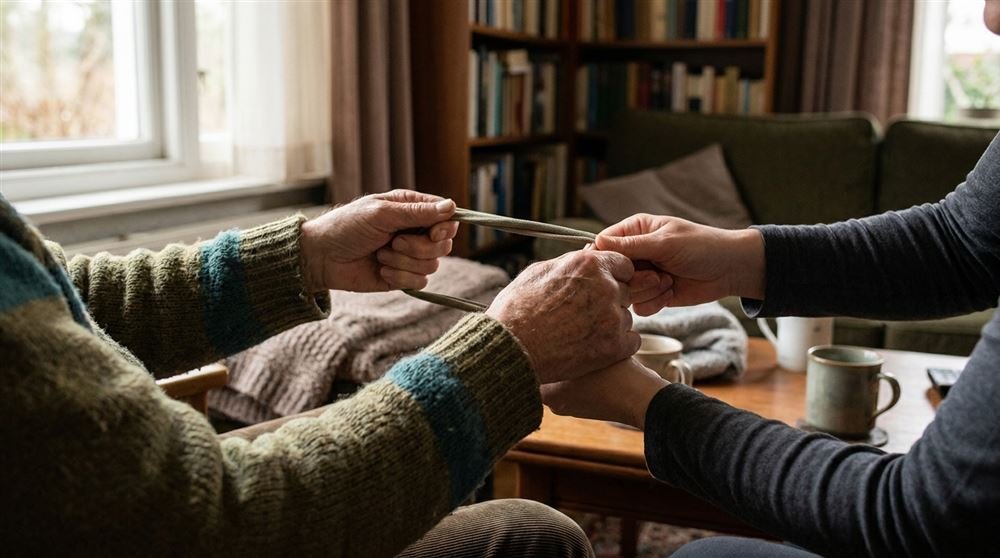
The Real Driver: Muscle That Quietly Disappears
A widely cited review in Current Opinion in Clinical Nutrition and Metabolic Care (Volpi et al., 2004) estimates that muscle mass declines by roughly 3–8% per decade after age 30, with the pace picking up after 60. Because it happens so slowly, most people don’t notice. Your weight on the scale can stay the same while the proportion of muscle to fat gradually shifts.
Muscle matters for metabolism in two ways.
1. It burns more at rest than fat does — but less than you might think. A 2010 study in the American Journal of Clinical Nutrition (Wang et al.) estimated that, in adults over 50, skeletal muscle burns about 12.6 calories per kilogram per day (roughly 6 calories per pound), compared with about 4.4 per kilogram for fat tissue (about 2 per pound). That’s a real difference, but losing 5 pounds of muscle only lowers your resting burn by around 30 calories a day. Muscle loss alone doesn’t explain a 10-pound gain.
2. It shapes how much you move. This is the bigger effect. Less muscle means less strength, and less strength makes everyday movement — climbing stairs, carrying groceries, gardening, a long walk — feel harder. Most of us gradually do less of it. The calories you burn through everyday movement outside of formal exercise, called NEAT, can vary by hundreds of calories a day between people. We break that down in NEAT: the invisible exercise that burns more than your workout.
Hormones play a part too. For women, the drop in estrogen around menopause is linked to changes in where fat is stored and how muscle is maintained; for men, testosterone declines more gradually.

The Good News: Muscle Responds at Any Age
Unlike the myth of a “broken” metabolism, muscle loss responds directly to what you do — even late in life.
- Even in your 90s. In a classic 1990 study in JAMA, Maria Fiatarone and colleagues put 10 frail nursing-home residents, average age 90, through 8 weeks of high-intensity strength training. Among the nine who finished, strength increased by an average of 174%, thigh muscle area grew by about 9%, and walking speed improved.
- Across many studies. A 2011 meta-analysis in Medicine & Science in Sports & Exercise (Peterson et al.) pooled 49 studies and 1,328 older adults. After an average of about 20 weeks of resistance training, participants gained an average of 1.1 kg (about 2.4 lb) of lean mass. Programs with more total work produced bigger gains, and the oldest participants gained somewhat less — a good reason to start sooner rather than later.
You don’t need a gym or hours a week. Two short sessions covering the major muscle groups is a solid foundation, as we explain in The Minimum Effective Dose of Strength Training. If you’d like a simple structure to follow, our free strength plan walks you through a beginner-friendly routine you can do at home.
What Actually Helps Your Metabolism After 50
Putting the research together, the most useful levers are simple, unglamorous, and consistent:
- Strength train twice a week. Squats (or sit-to-stands from a chair), pushes, rows, and carries. Gradually make them harder. This is the single most direct way to protect the muscle that supports both your resting burn and your daily activity.
- Eat enough protein. An expert group (PROT-AGE, 2013) recommends that adults over 65 get at least 1.0–1.2 grams of protein per kilogram of body weight per day — roughly 0.45–0.55 grams per pound — and more for those who exercise. For a 170-pound person, that’s about 77–93 grams a day. Spreading it across meals is a practical approach. See How Much Protein You Really Need After 50.
- Move more between workouts. Walking after meals, taking the stairs, standing while on the phone. These small habits add up across a week.
- Protect your sleep. Poor sleep makes it harder to recover from training and to manage appetite. We explore the connection in Sleep, Cortisol, and the Weight That Won’t Budge.
- Be wary of “metabolism booster” supplements. No pill reverses muscle loss the way training and adequate protein do.
Frequently Asked Questions
At what age does metabolism really slow down?
According to the largest study to date (Pontzer et al., Science, 2021), adult metabolism adjusted for body size stays fairly stable from about 20 to 60, then declines slowly — around 0.7% per year — after 60.
Why am I gaining weight after 50 if my metabolism hasn’t changed?
The usual culprits are gradual muscle loss, less daily movement, changes in sleep, and hormonal shifts — especially around menopause. Each one is small, but together they can tip your energy balance over time.
Can you speed up your metabolism after 50?
You can’t override your biology, but you can protect and rebuild the muscle that supports it. Strength training, enough protein, and more everyday movement are the strategies with the strongest evidence.
Is it too late to build muscle after 60?
No. Studies show measurable gains in strength and muscle even in people in their 90s. Starting gently and progressing gradually is the safest approach — our guide to strength training after 60 covers how to begin.
The Takeaway
Your metabolism after 50 isn’t a broken engine. The best research shows it holds steady through middle age and only slows gradually after 60. What changes earlier is mostly muscle and movement — and both respond to what you do. Two strength sessions a week, enough protein at each meal, more everyday activity, and decent sleep won’t make you 25 again, but they are the most reliable way to keep your body working for you for decades to come.
Free: The 2-Day Strength Plan for Adults Over 50
A simple 4-week, at-home routine: two short sessions a week, no gym required. Includes the CDC chair-stand test and a printable progress sheet.
You will also get our occasional research-based health emails. Unsubscribe anytime. See our Privacy Policy.
Sources
- Pontzer H et al. “Daily energy expenditure through the human life course.” Science (2021). doi:10.1126/science.abe5017
- Volpi E, Nazemi R, Fujita S. “Muscle tissue changes with aging.” Current Opinion in Clinical Nutrition and Metabolic Care (2004). PMC2804956
- Wang Z et al. “Specific metabolic rates of major organs and tissues across adulthood: evaluation by mechanistic model of resting energy expenditure.” American Journal of Clinical Nutrition (2010). sciencedirect.com
- Fiatarone MA et al. “High-intensity strength training in nonagenarians: effects on skeletal muscle.” JAMA (1990). jamanetwork.com
- Peterson MD, Sen A, Gordon PM. “Influence of resistance exercise on lean body mass in aging adults: a meta-analysis.” Medicine & Science in Sports & Exercise (2011). doi:10.1249/MSS.0b013e3181eb6265
- Bauer J et al. “Evidence-based recommendations for optimal dietary protein intake in older people: a position paper from the PROT-AGE Study Group.” Journal of the American Medical Directors Association (2013). PubMed 23867520
This article is for educational purposes only and is not a substitute for professional medical advice. Always consult your doctor before making changes to your diet, exercise, or supplement routine. Some links on this site may be affiliate links, meaning we may earn a small commission at no extra cost to you.
2 Responses