
Why Morning Light Matters More Than Coffee
Before reaching for a second cup of coffee, the single most powerful energy tool available each morning is free: natural light. Getting outside for just 10 to 30 minutes within the first hour of waking provides the kind of retinal light stimulation that anchors your circadian clock for the entire day. Outdoor light, even on a cloudy morning, typically measures 10,000 to 20,000 lux — compared to just 100 to 500 lux indoors. That difference matters: it’s what tells your brain, unambiguously, that the day has started, setting the timing for alertness now and melatonin release roughly 14 to 16 hours later. This matters just as much after 50 as at any other age — circadian rhythms naturally shift with aging, and many people find they wake earlier than they used to, which makes anchoring that early wake time with real light exposure even more useful rather than fighting against it.

The Cortisol Spike You Actually Want
Not all cortisol is the villain it’s made out to be. In the first 30 to 45 minutes after waking, a healthy, natural rise in cortisol called the cortisol awakening response (CAR) helps shift the body from sleep into alertness. Research shows that exposure to bright light with more blue and green wavelengths — exactly what morning outdoor light provides — helps this response complete more fully than staying in dim indoor light. This is a different kind of cortisol activity than the chronic, stress-driven elevation linked to health concerns; it’s a normal, time-limited signal that’s supposed to happen every morning, and supporting it with real light exposure is one of the simplest ways to feel more alert without caffeine.
The Habit That Beats Any Supplement
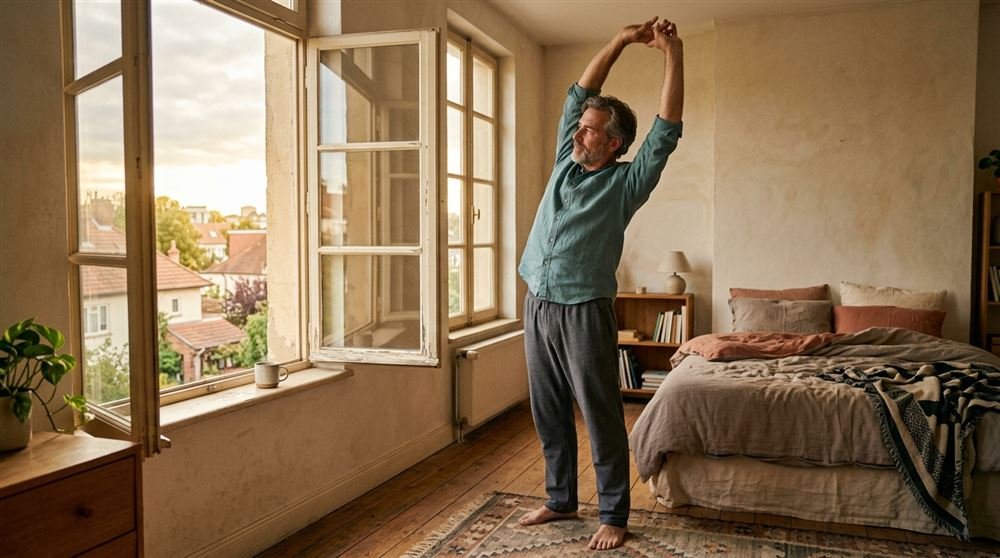
Of all the variables researchers have studied in circadian health, a consistent wake time — not bedtime — stands out as the single most important habit for keeping the body’s internal clock properly anchored, which in turn affects cortisol timing, alertness, and sleep quality that night. Pairing a consistent wake time with even a short burst of morning movement, like a 10-minute walk, compounds the benefit: light physical activity in the morning has been shown to improve mood and cognitive function for the rest of the day, and it further reinforces the circadian signal that light exposure alone starts. Neither of these habits requires special equipment or a big time investment — just consistency.

The Takeaway
A genuinely science-based morning routine doesn’t require a complicated regimen: get outside within the first hour of waking, let that natural light do its job on your circadian rhythm, and add a short walk if you can. Waking up at roughly the same time every day, weekends included, does more for consistent energy than almost any product on the market. Coffee still has its place — but it works better as a complement to these habits than as a replacement for them.
Free: The 2-Day Strength Plan for Adults Over 50
A simple 4-week, at-home routine: two short sessions a week, no gym required. Includes the CDC chair-stand test and a printable progress sheet.
You will also get our occasional research-based health emails. Unsubscribe anytime. See our Privacy Policy.
Sources: PMC research on light wavelength and cortisol awakening response; Huberman Lab research summaries on circadian rhythm and morning light.
This article is for educational purposes only and is not a substitute for professional medical advice. Always consult your doctor before making changes to your diet, exercise, or supplement routine. Some links on this site may be affiliate links, meaning we may earn a small commission at no extra cost to you.