
If you or someone you know has started a GLP-1 medication and worried about losing muscle along with fat, that concern is reasonable — it comes up constantly in patient forums and doctor visits alike. But the full picture, once you look at what the actual studies measured, is more encouraging than the headlines suggest. Here is what the research shows, and more importantly, what changes the outcome for the better.

Watch the 1-minute summary
What actually happens to muscle on GLP-1 medications
Clinical data shows that people on GLP-1 medications typically lose 25 to 40 percent of their total weight loss as lean mass. That number sounds alarming until you understand the context: this proportion is largely adaptive to rapid weight loss in general, showing up in low-calorie diets and bariatric surgery too, not something unique to this drug class. A 2026 systematic review of GLP-1 receptor agonists specifically looking at muscle mass, strength, and quality found no clinically meaningful decline in overall strength or function across the available studies, even where some lean tissue was lost.
In other words, losing some lean mass alongside fat during significant weight loss appears to be a normal physiological response, not evidence that the medication is specifically “eating” muscle. The distinction matters because it changes what you should actually do about it.
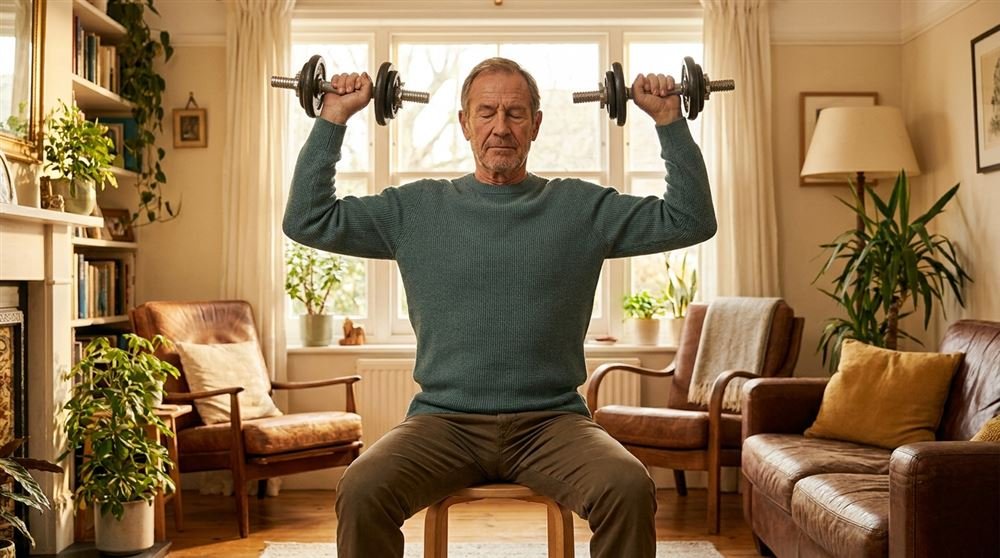
The two things that change the outcome
A 2025 registered study following 200 adults combined GLP-1 therapy with resistance training education and individualized protein targets of roughly 0.36 grams per pound of body weight daily. Participants lost about 13 percent of their body weight — but only 3 percent of it was muscle. That is a dramatically different ratio than the 25-to-40-percent figure often cited for GLP-1 therapy generally, and the difference came down to two deliberate choices made alongside the medication: eating enough protein, and training the muscles being asked to carry less weight. Neither change requires stopping or altering the medication itself; both simply run in parallel with it.
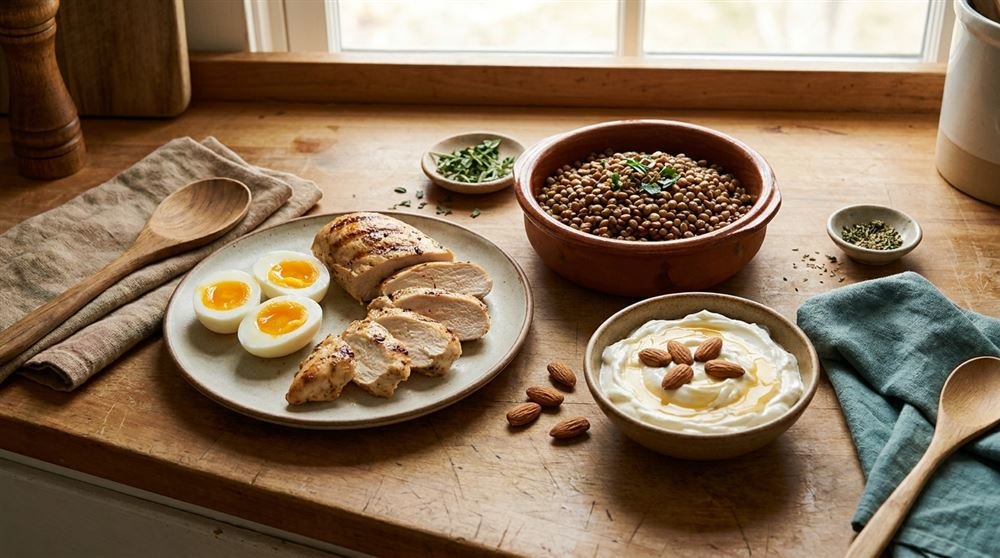
How much protein and what kind of training
Evidence-based recommendations for adults actively losing weight generally fall between 1.2 and 2 grams of protein per kilogram of body weight daily — noticeably higher than the standard guidelines built for a stable, non-dieting weight. Spreading that across three meals, with a source like eggs, poultry, fish, yogurt, or legumes at each one, tends to be far more sustainable than trying to eat it all at dinner. On the training side, the same principle that applies broadly to muscle preservation after 50 holds here too: consistent resistance training, even just two sessions a week working the major muscle groups, is what signals the body to hold onto lean tissue rather than shed it indiscriminately alongside fat.
The takeaway
GLP-1 medications are not inherently muscle-wasting, and the fear that they are can obscure the more useful question: what can you control alongside the medication? Protein intake and resistance training are the two levers with real evidence behind them, and both are entirely within your own hands regardless of what medication you are or are not taking. If you are on or considering a GLP-1 medication, this is exactly the kind of thing worth raising directly with your prescriber or a registered dietitian, who can help set targets specific to your situation.
Sources: David Protein clinical research summary on GLP-1 and protein intake; “Effects of GLP-1 Receptor Agonists on Muscle Mass, Strength, and Quality in MASLD: A Systematic Review,” PMC (2026); registered report on resistance training during GLP-1 receptor agonist therapy, medRxiv (2025). This article is for general information and is not medical advice — talk with your doctor before starting, stopping, or combining any medication with a new exercise or nutrition plan. Master Vitality may earn a commission from products linked on this site.
Free: The 2-Day Strength Plan for Adults Over 50
A simple 4-week, at-home routine: two short sessions a week, no gym required. Includes the CDC chair-stand test and a printable progress sheet.
You will also get our occasional research-based health emails. Unsubscribe anytime. See our Privacy Policy.
One Response