
Last reviewed: October 2026
Maybe the jar lids seem tighter than they used to. Maybe you’ve started using your hands to push up from the couch, or the grocery bags feel heavier on the walk from the car. It’s easy to shrug these things off as “just getting older.” But sometimes they’re early signs of something with a name — sarcopenia, the age-related loss of muscle strength and mass. The good news is that it’s common, it’s measurable at home, and it responds well to two things almost anyone can do. Here’s what the research says about the early signs, how to check yourself, and what actually helps.
What Sarcopenia Actually Is
Sarcopenia is more than having smaller muscles. The current European definition, published in Age and Ageing in 2019 by the European Working Group on Sarcopenia in Older People (EWGSOP2), puts low muscle strength at the center. Low strength makes sarcopenia “probable.” Low muscle quantity or quality confirms it. And when physical performance — like walking speed — is also low, it’s considered severe.
That shift matters. Strength, not size, is what predicts whether you can climb stairs, carry groceries, and get up after a fall. It’s also something you can test without a scan.
How common is it? A 2022 meta-analysis in the Journal of Cachexia, Sarcopenia and Muscle (Petermann-Rocha et al.) pooled 151 studies and nearly 700,000 people, with an average age of about 68. Depending on the definition used, 10% to 27% of older adults met the criteria for sarcopenia. In other words, it isn’t rare — but most people never get checked.
Muscle loss usually happens slowly, which is exactly why it’s easy to miss. A review by Mitchell and colleagues in Frontiers in Physiology (2012) estimated that after about age 70, people lose roughly 0.5–1% of their muscle mass per year. Strength falls even faster: around age 75, losses of about 2.5–3% per year in women and 3–4% per year in men. A little each year adds up to a lot over a decade.
Early Signs of Muscle Loss to Watch For
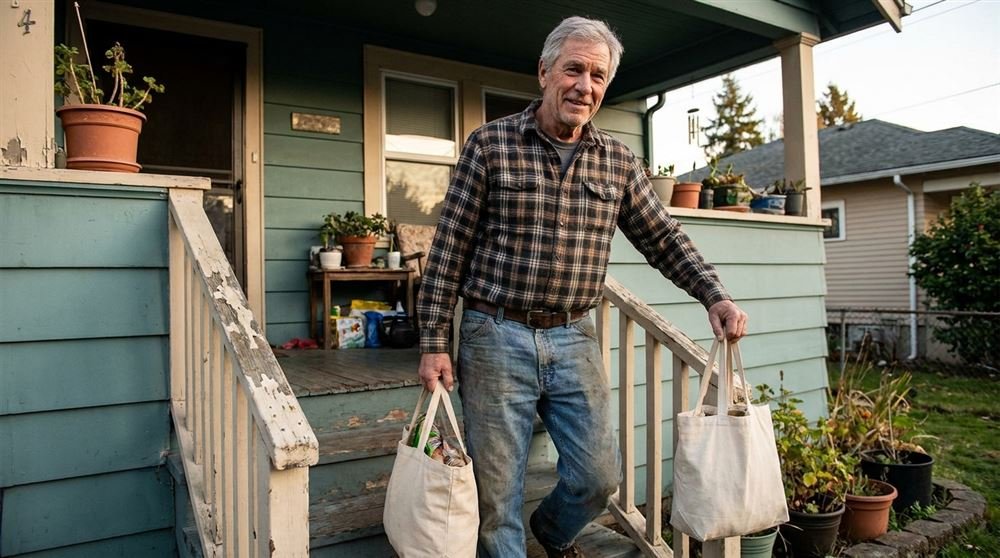
Sarcopenia rarely announces itself. Instead, it shows up as small changes in everyday tasks. A 2019 seminar on sarcopenia in The Lancet (Cruz-Jentoft and Sayer) describes the main consequences as falls, functional decline, frailty, and higher mortality — which is why the early, subtle signs are worth noticing.
Common early signs include:
- Needing your arms to get up from a chair, a low couch, or the toilet.
- Weaker grip — trouble opening jars, carrying bags, or holding heavier pans.
- Stairs feel harder, or you’ve started holding the railing every time.
- Walking more slowly, or friends noticing that you’ve fallen behind on walks.
- Tiring faster during household tasks like gardening or vacuuming.
- A recent fall or near-fall, or feeling less steady on your feet.
- Losing weight without trying, or clothes fitting differently even though the scale hasn’t changed much.
Some situations speed up muscle loss, so it’s worth paying closer attention if any apply to you: a recent hospital stay or long period of bed rest, a chronic illness, eating less than you used to, or rapid weight loss — including weight loss on GLP-1 medications. We cover that last point in GLP-1 and muscle loss.
Simple Ways to Check Yourself at Home
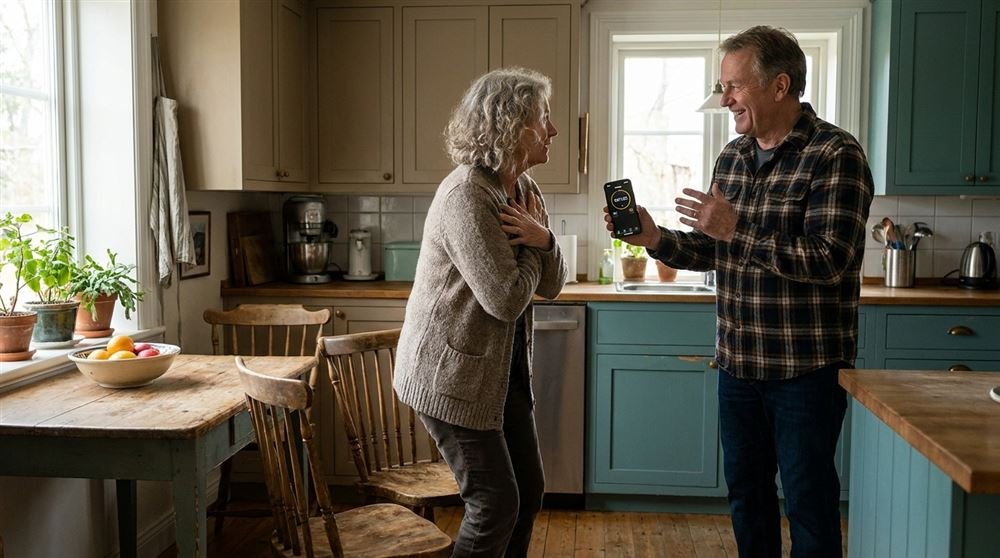
Only a clinician can diagnose sarcopenia, but you can get a useful early signal in a few minutes. These are the same screening tools that EWGSOP2 recommends doctors use first.
1. The SARC-F questionnaire. Developed by Theodore Malmstrom and John Morley (Journal of the American Medical Directors Association, 2013), it asks about five things. Score each from 0 (no difficulty) to 2 (a lot of difficulty, or unable):
- Strength: How much difficulty do you have lifting and carrying 10 pounds?
- Assistance in walking: How much difficulty do you have walking across a room?
- Rise from a chair: How much difficulty do you have getting up from a chair or bed?
- Climb stairs: How much difficulty do you have climbing a flight of 10 stairs?
- Falls: How many times have you fallen in the past year? (None = 0, 1–3 = 1, 4 or more = 2)
A total of 4 or more suggests a higher risk of sarcopenia and is a good reason to talk to your doctor. The SARC-F is very good at flagging people who likely have a problem, but it can miss milder cases — so a low score isn’t a guarantee.
2. The five-time chair stand. Sit in a sturdy chair with your arms crossed over your chest. Time how long it takes to stand up fully and sit back down five times, as quickly as you safely can. Under EWGSOP2, taking longer than 15 seconds points to low leg strength. (Have someone nearby the first time, and put the chair against a wall.)
3. Grip strength. If your doctor or a physical therapist has a grip dynamometer, ask to be tested. EWGSOP2 uses cut-offs of under 27 kg for men and under 16 kg for women. Grip matters beyond the hands: in the PURE study of about 140,000 adults (The Lancet, 2015), every 5 kg drop in grip strength was linked to a 16% higher risk of death from any cause.
Write your results down and repeat them every three to six months. A trend tells you far more than a single number.
What Actually Helps: Strength Training and Protein
There’s no pill approved to treat sarcopenia. What has the strongest evidence is simpler: resistance exercise, backed up by enough protein.
Strength training is the foundation. The National Strength and Conditioning Association’s 2019 position statement on resistance training for older adults (Fragala et al.) concluded that well-designed programs improve strength, muscle mass, and physical function — including in people who are already frail or have sarcopenia. Over time, the statement recommends working toward 2–3 sets of exercises for each major muscle group, two to three times a week, progressing gradually.
You don’t need a gym to start. Sit-to-stands, wall push-ups, resistance-band rows, and calf raises cover most of what matters. Our guide to starting strength training safely at home walks through a beginner routine, and research on the minimum effective dose of strength training shows that short, consistent sessions deliver most of the benefit. If you want a ready-made plan, our free 2-day strength plan for adults 50+ lays out each session step by step.
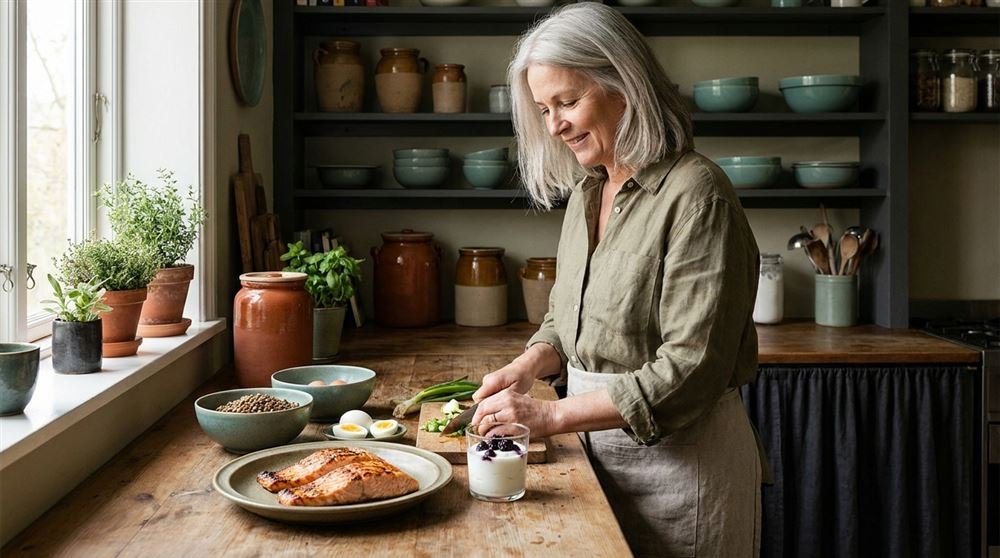
Protein gives muscle the raw material to respond. The PROT-AGE study group (Bauer et al., Journal of the American Medical Directors Association, 2013) recommends that adults over 65 aim for at least 1.0–1.2 grams of protein per kilogram of body weight per day — more than the standard adult recommendation of 0.8 g/kg. For someone weighing 160 pounds (about 73 kg), that’s roughly 73–88 grams a day. The group also noted that people who are active or recovering from illness may need more, while people with advanced kidney disease need individual advice.
Spreading protein across meals, rather than loading it all at dinner, makes it easier to reach the target. Eggs, Greek yogurt, fish, beans, lentils, chicken, and cottage cheese are all practical options. For specifics, see how much protein you really need after 50.
What about supplements? Creatine has the most research behind it as an add-on to strength training in older adults, but it works alongside exercise, not instead of it. We review the evidence in creatine after 50.
Frequently Asked Questions
What are the first signs of sarcopenia?
The earliest signs are usually functional: needing your arms to get up from a chair, a weaker grip, stairs feeling harder, walking more slowly, or a recent fall. These often appear before any visible change in muscle size.
At what age does sarcopenia start?
Muscle mass and strength begin to decline gradually in midlife, and the loss tends to speed up after about 70. Most of the research on sarcopenia focuses on adults over 65, but the habits that prevent it are worth starting in your 50s.
Can sarcopenia be reversed?
It can often be improved. Resistance training improves strength and function even in older adults who are already frail, especially when combined with enough protein. The earlier you start, the more muscle you have to work with.
How is sarcopenia diagnosed?
A clinician typically starts with a screening questionnaire such as the SARC-F, then measures strength with a grip test or chair-stand test. If strength is low, muscle mass may be measured with a scan such as DXA, and walking speed may be checked to judge severity.
The Takeaway
Sarcopenia is common, gradual, and easy to overlook — but it isn’t inevitable or hopeless. If you’ve noticed that chairs, stairs, or jar lids are getting harder, take the SARC-F and the five-time chair stand this week, write down your results, and bring them to your next checkup. Then focus on the two things with the strongest evidence: strength training at least twice a week and enough protein at every meal. Muscle responds at any age, and the strength you build now protects your independence later.
Free: The 2-Day Strength Plan for Adults Over 50
A simple 4-week, at-home routine: two short sessions a week, no gym required. Includes the CDC chair-stand test and a printable progress sheet.
You will also get our occasional research-based health emails. Unsubscribe anytime. See our Privacy Policy.
Sources
- Cruz-Jentoft AJ et al. “Sarcopenia: revised European consensus on definition and diagnosis.” Age and Ageing (2019). academic.oup.com
- Petermann-Rocha F et al. “Global prevalence of sarcopenia and severe sarcopenia: a systematic review and meta-analysis.” Journal of Cachexia, Sarcopenia and Muscle (2022). doi:10.1002/jcsm.12783
- Mitchell WK et al. “Sarcopenia, dynapenia, and the impact of advancing age on human skeletal muscle size and strength; a quantitative review.” Frontiers in Physiology (2012). doi:10.3389/fphys.2012.00260
- Cruz-Jentoft AJ, Sayer AA. “Sarcopenia.” The Lancet (2019). sciencedirect.com
- Malmstrom TK, Morley JE. “SARC-F: a simple questionnaire to rapidly diagnose sarcopenia.” Journal of the American Medical Directors Association (2013). jamda.com
- Leong DP et al. “Prognostic value of grip strength: findings from the PURE study.” The Lancet (2015). thelancet.com
- Fragala MS et al. “Resistance Training for Older Adults: Position Statement From the National Strength and Conditioning Association.” Journal of Strength and Conditioning Research (2019). doi:10.1519/JSC.0000000000003230
- Bauer J et al. “Evidence-based recommendations for optimal dietary protein intake in older people: a position paper from the PROT-AGE Study Group.” Journal of the American Medical Directors Association (2013). doi:10.1016/j.jamda.2013.05.021
This article is for educational purposes only and is not a substitute for professional medical advice. Always consult your doctor before making changes to your diet, exercise, or supplement routine. Some links on this site may be affiliate links, meaning we may earn a small commission at no extra cost to you.